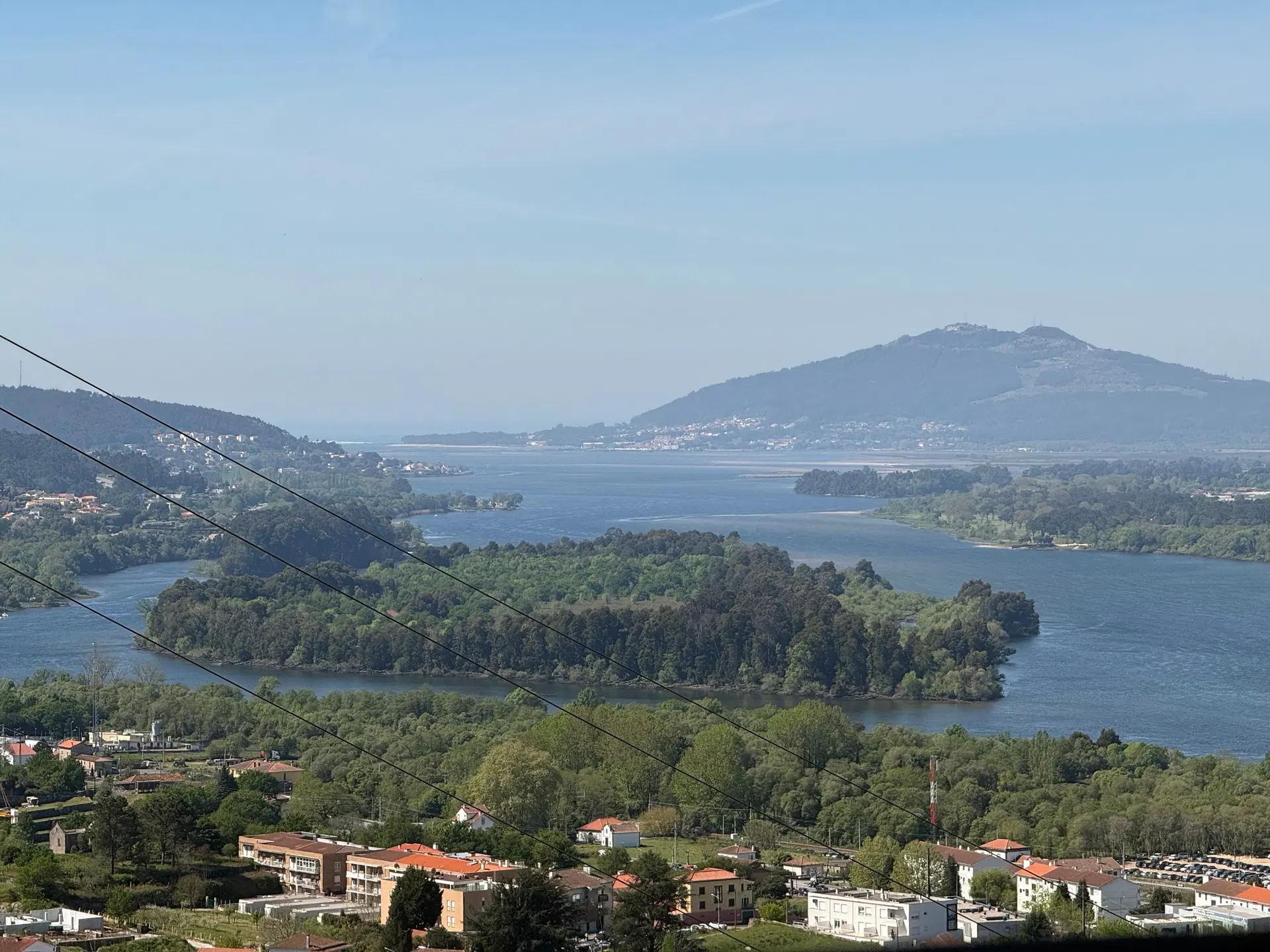
From Valença's ramparts you see Tui; from Tui's cathedral you see Valença. The two towns have watched each other across the Minho for centuries — and today the border between them crosses without a trace. Twenty minutes from the house.
The fortress-cathedral
Tui's centre climbs medieval lanes to the cathedral of Santa María — a cathedral with battlements, built to defend as much as to worship. Inside, a Gothic cloister; outside, the river viewpoint with the Portuguese fortress on the far bank.
The old town is compact and walkable: cathedral, the nuns' tunnel, chapels, small squares with café terraces. Two hours do it justice; add a table and make it half a day.
The classic: tapas and home
The Minho border taught both banks a habit: dinner in one country, sleep in the other. Tui answers with taperías and Galician cooking — octopus, Padrón peppers, tortilla, Albariño — twenty minutes from your bed in Gondar.
The Camino
Tui is also the classic Spanish starting point of the Portuguese Camino — one of the few starts that still guarantees the minimum walking distance for the Compostela. You see it in town: shells in the pavement, albergues, pilgrims at dusk.
Fitting it in
- Half a day — cathedral + old town + tapas, paired with Valença: two towns, one bridge.
- At dinner — the stay's classic night out.
- A full Galician day — Tui in the morning, Santa Trega or Vigo after.
Common questions
Do I need documents or currency?
No — Spain and Portugal share the euro and Schengen. Carry ID as on any trip, nothing more. One practical note: Spain runs one hour ahead of Portugal.
Is it worth going just for dinner?
It's a border classic: tapas in Tui, bed in Portugal. Twenty minutes by motorway — less than many people drive to a restaurant in their own city.
What's unmissable in Tui?
The fortress-cathedral on top, the medieval tangle around it, and the river viewpoint with Valença opposite. Half a day does it justice; a slow day with a long lunch does it better.