Galicia
Tui: the cathedral across the river, 20 minutes away
The historic Galician town facing Valença: a fortress-cathedral, a compact medieval centre and tapas a step from Portugal. How to visit from the house.
1 min read
The border is fifteen minutes from the house, over the Friendship Bridge. Tui at twenty minutes, Vigo at forty — the other bank counts, and this guide explains how to make the most of it.
The border next door. From here, Spain isn't a trip — it's a hop. The Friendship Bridge, opened in June 2004, links Vila Nova de Cerveira to Goián, in the municipality of Tomiño, fourteen minutes by car from the house, and suddenly the language changes, the mealtimes change and the menu changes. There are no border checks: Portugal and Spain share the euro and the Schengen area, and you carry your passport or ID card as you would on any trip.
Tui. Twenty minutes away, Tui climbs through medieval streets to the cathedral of Santa María, begun in 1120 and consecrated in 1225 — a cathedral with battlements, built to defend as well as to pray, whose doorway is the earliest Gothic sculpture in the Iberian Peninsula, with a cloister built between the twelfth and fifteenth centuries and a museum. The old centre is compact and made for walking: the nuns' tunnel, chapels, small squares with café terraces and the viewpoint over the river with Valença's fortress opposite. Tui is also the classic starting point of the Portuguese Way to Santiago on the Spanish side, and you notice the pilgrims in the late afternoon. Two hours do it justice; with a meal, half a day. Valença and Tui make a single outing.
Vigo. Forty minutes away, Vigo is the largest city in Galicia and the nearest big city to the house: the Casco Vello running down to the port, oysters at the Mercado da Pedra, shops, restaurants and urban buzz when you feel like a city day. From the ferry terminal, boats leave for the Cíes islands in the Atlantic Islands National Park — but at Easter and between 15 May and 15 September you need a free advance permit from the Xunta de Galicia to land, with a daily cap on visitors; outside those dates the permit is arranged through the boat company. It's not a spur-of-the-moment trip: book the permit and the boat ahead through the official channels.
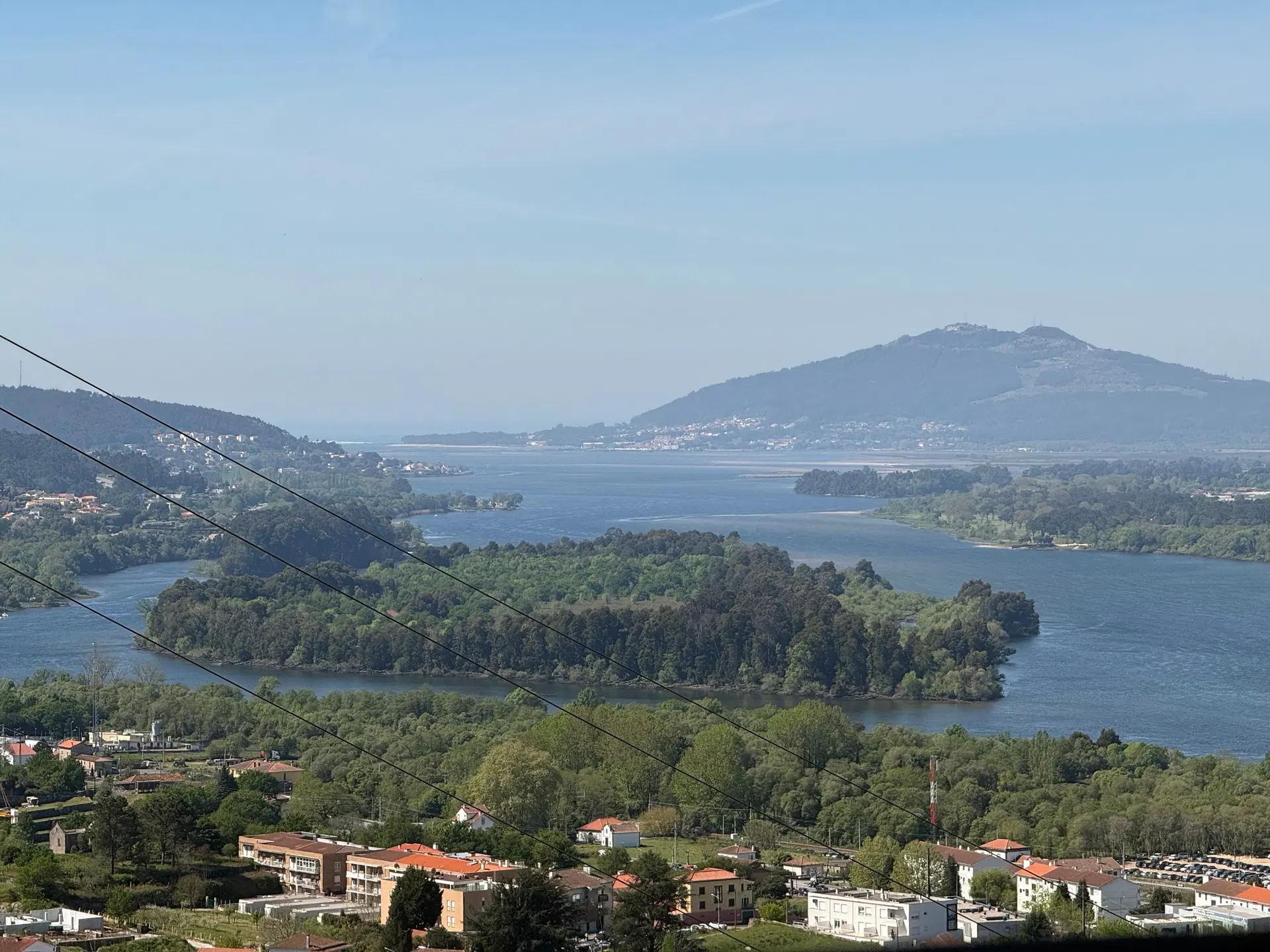
A Guarda and Monte Santa Trega. At the mouth of the Minho, opposite Caminha, A Guarda is a fishing town with a working harbour and a good stop for a fish lunch. Above it, Monte Santa Trega rises 341 metres straight out of the estuary, with the ruins of one of the largest Celtic hillforts in Galicia — round stone houses, a listed historic monument since 1931 — and a small archaeological museum at the top. You drive almost all the way up, pay a token access fee, and the hill's trust runs free guided visits at certain times of year; check hours and conditions on A Guarda's tourism website. The view explains the whole region: the river meeting the Atlantic, Caminha and Moledo on the Portuguese bank. The summit is exposed — take water and a hat.
Baiona. On the coast south of Vigo, Baiona was the first port in Europe to hear that Columbus had reached America: the caravel Pinta sailed in on 1 March 1493, and a replica sits in the harbour with a small museum on board — the Festa da Arribada marks the date every year in early March. The Monterreal fortress above the bay has housed a Parador hotel since 1966, and you can walk its walls with the sea on both sides. It pairs well with A Guarda on the same day along the coast road.
Spanish hours. Spain runs an hour ahead of Portugal, and the difference counts twice: on the clock and in the habits. As a rule, Galicia lunches after two and dines after nine, and many kitchens only open in the evening from half past eight or nine. Dinner at eight Portuguese time is nine in Tui — which, as it happens, fits perfectly. Reset your watch on the bridge and check museum and monument hours in local time.
Money and phones. It's all euros, and your cards work as at home. Roaming within the European Union carries no extra charge, but near the river it's worth switching off automatic network selection, because your phone often picks up the Spanish network while still in Portugal. The phone's clock changes by itself on the bridge.
Sleep in Portugal, dine in Spain. That's the logic of this house: the Minho border taught both banks to eat in one country and sleep in the other. Tapas in Tui — octopus, Padrón peppers, tortilla, Albariño — at Tapería A Carla, our usual address, and twenty minutes later bed in Gondar. It works the other way too: visitors from Galicia get the Saturday market in Cerveira, the fortress of Valença, the Minho greenway and the beaches of Caminha and Moledo.
Fitting it in. Half a day: Tui, joined to a visit to Valença. A full day: Santa Trega and lunch in A Guarda, then Baiona or Vigo in the afternoon, returning along the Galician bank of the Minho to Goián and the Friendship Bridge. In the evening: Tui, the classic night out of the stay. With children: the hillfort at Santa Trega is a setting for stories, and Cerveira's Aquamuseu is on the way home.
The house. Casa de Santa Eulália is in Gondar, fourteen minutes from the bridge: three bedrooms for up to six guests, a private pool, a courtyard and a wood-burning stove. It's the base for both banks of the river without changing beds.
Galicia
The historic Galician town facing Valença: a fortress-cathedral, a compact medieval centre and tapas a step from Portugal. How to visit from the house.
1 min read
Galicia
The hillfort above the Minho's mouth, a fishing town for lunch, and Galicia's biggest city 40 minutes away. The Galician day out from the house.
2 min read
Galicia
The Santa Trega hillfort, the MASAT museum, the view over the Minho estuary, the car access fee and how to get there from the house in Portugal.
6 min read